Home ProductsLFX™ Series – Liquid Filtration ExcellenceLFX-ACT™ Activated Carbon Filter Bags
LFX™ Series – Liquid Filtration Excellence

LFX-ACT™ Activated Carbon Filter Bags

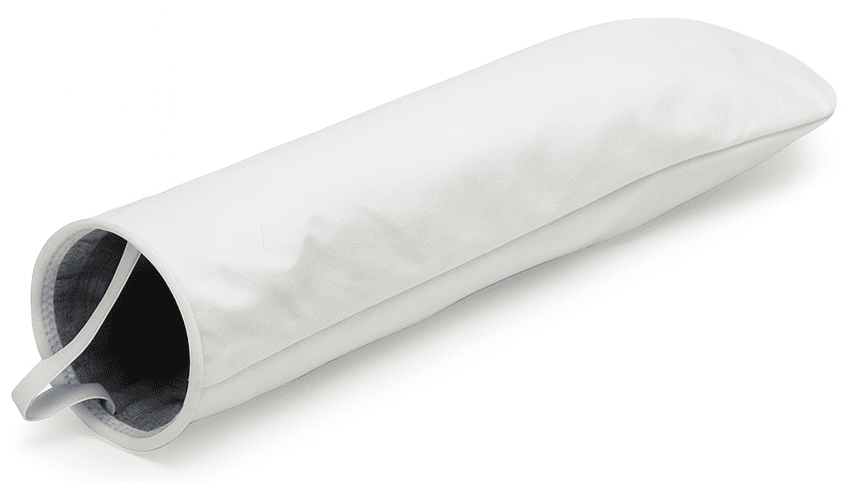
FiltraCore Asia’s LFX-ACT™ activated carbon liquid filter bags are engineered to combine adsorption-based contaminant reduction and particulate filtration within a single bag filter format, supporting the reduction of colour, odour, free chlorine, volatile organic compounds (VOCs), hydrocarbons, and other dissolved organics in industrial process liquids.

Manufactured using coconut-shell powdered activated carbon (DLPAC grade) for effective reduction of chlorine, taste- and odour-causing compounds, and low-molecular-weight organics, or coal-based powdered activated carbon (DLCTO grade) for broader-spectrum organic, colour-body, and VOC reduction, LFX-ACT™ filter bags offer a cost-efficient adsorption solution when designed against appropriate EBCT and operating conditions.

Engineered for demanding applications including chemical processing, wastewater polishing, food & beverage pre-treatment, and industrial water polishing, LFX-ACT™ activated carbon filter bags are designed to support stable adsorption performance, extended service life, and dependable operation, while minimising process disruption and maintenance downtime.

Technical Specifications
  • Media & construction:
    Multi-layer felt filter bag with integrated activated-carbon adsorption layer, supported by a polypropylene matrix. Bonded construction limits fibre migration and carbon fines release. Available with moulded polypropylene or polyester flange, or galvanised-steel / stainless-steel snap-ring options for secure sealing in standard bag filter housings.
  • Carbon base options:
    DLPAC (coconut-shell powdered activated carbon) or DLCTO (coal-based powdered activated carbon). Carbon grade, iodine number, particle size (mesh), and carbon loading per bag are specified to suit application-specific EBCT and adsorption objectives.
  • Operating limits:
    Maximum operating temperature ≤ 80 °C continuous, with short-term excursions up to 90 °C (application-dependent). Continuous pH range 4–10; short-term exposure 2–11.
    Recommended differential pressure (ΔP) change-out typically 0.8–1.5 bar. Maximum differential pressure up to 2.5 bar at 20 °C, depending on operating conditions.
  • Filtration & adsorption performance:
    Nominal particulate retention 25 µm standard (50 µm available on request). Designed for adsorption-based reduction of free chlorine, taste- and odour-causing compounds, hydrocarbons, VOCs, and other dissolved organic contaminants, subject to water chemistry, EBCT, and operating conditions.
    Carbon migration is controlled through bonded multi-layer construction; a brief pre-flush at start-up is recommended to remove trace fines.
Applications
  • Automotive & engine — adsorption-based reduction of organic residues and odour compounds in rinse and wash water streams.
  • Electronics & semiconductor — polishing of de-ionised rinse water and reduction of trace organic contaminants in high-purity process utilities.
  • Food & beverage — reduction of free chlorine, taste- and odour-causing compounds during process-water treatment for brewing, bottling, and ingredient preparation (food-contact variants where required).
  • Industrial manufacturing — adsorption of residual solvents and dissolved organic contaminants in final rinse and process-water streams.
  • Metalworking & surface treatment — reduction of VOCs and dissolved organics in plating baths, rinse tanks, and recovery systems (application-specific validation required).
  • Mining & mineral processing — polishing of tailings leachate and water-reuse circuits to reduce organics and improve downstream water quality.
  • Power generation — reduction of trace oils, organics, and chlorinated by-products in boiler-feed and cooling-water systems.
  • Textiles & dyeing — odour control and residual chemical adsorption in finishing baths and wastewater treatment processes.
  • Water treatment & desalination — final-stage polishing for residual chlorine, taste/odour compounds, VOCs, and other trace organics in municipal and industrial installations.