
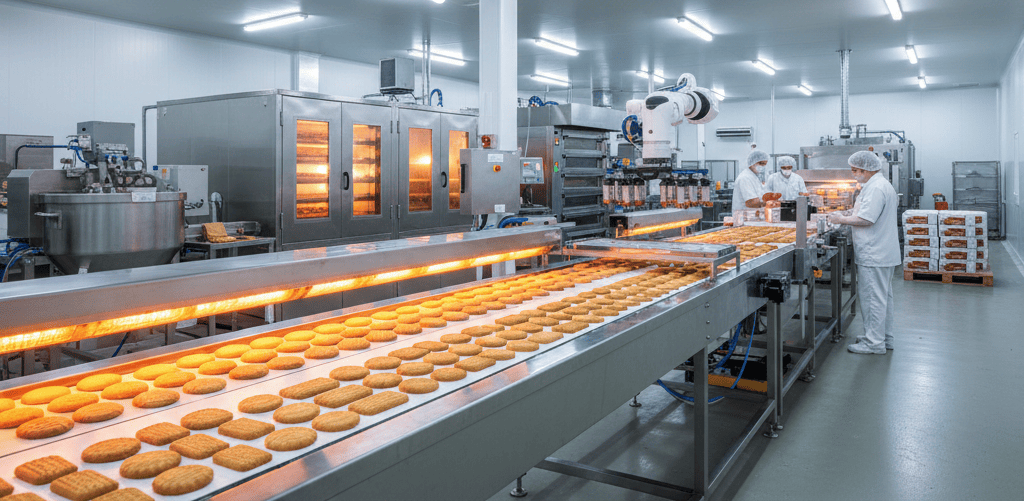
Introduction: Why Filtration in Biscuit and Confectionery Production Is Non-Negotiable
By FiltraCore Asia — Technical Insights SeriesFiltration in biscuit and confectionery production is a core engineering control that underpins food safety, product consistency, plant safety, and operational uptime. Unlike liquid-only food processes, biscuit and confectionery manufacturing involves the continuous interaction of liquids, semi-solids, powders, fats, oils, air, and utilities, each introducing distinct contamination and risk pathways.
At industrial scale, even minor lapses in filtration in biscuit and confectionery production can result in visible product defects, coating inconsistencies, equipment fouling, foreign-body incidents, or—within dry processing zones—serious combustible dust hazards. For high-volume biscuit and confectionery manufacturers, filtration is not a supporting utility; it is process infrastructure.
Where Contamination and Risk Arise in Biscuit and Confectionery Production
In filtration in biscuit and confectionery production, contamination and safety risks originate across multiple plant zones.
Liquid ingredients such as edible oils, fats, glucose syrups, sugar solutions, emulsions, and coatings can carry insoluble particulates, oxidation by-products, and debris introduced during storage, heating, and transfer. Without proper filtration, these contaminants compromise product appearance, coating uniformity, and the reliability of spray and depositor systems.
Dry processing areas present a different and often higher-consequence risk profile. Flour, sugar, starch, and cocoa powders generate fine airborne dust during conveying, mixing, dosing, and reclaim operations. If not controlled, these particulates migrate across production areas and materially increase explosion risk.
Utilities such as compressed air and HVAC systems further compound these risks by transporting oil aerosols, moisture, corrosion particles, and airborne dust into food-contact and packaging zones. Effective filtration in biscuit and confectionery production must therefore address all three domains: liquids, dust, and air.
Core Objectives of Filtration in Biscuit and Confectionery Production
From an engineering perspective, filtration in biscuit and confectionery production serves four primary objectives:
- First, food safety and foreign-body control—ensuring particulates and metallic contamination are removed before entering food-contact zones.
- Second, process stability—protecting pumps, heat exchangers, spray systems, and depositor heads from fouling and wear.
- Third, dust and explosion risk mitigation—particularly in flour-handling and dry-processing environments.
- Fourth, air quality and hygiene control—reducing cross-contamination and supporting clean production conditions.
Effective filtration must achieve these objectives without restricting throughput or creating excessive maintenance burden.
Staged Filtration as Best Practice in Biscuit and Confectionery Production
Leading manufacturers implement staged filtration in biscuit and confectionery production, where each filtration stage performs a defined role and protects downstream processes.
Liquid Ingredient Filtration
Upstream filtration removes coarse particulates from oils, fats, syrups, and liquid ingredients before they enter sensitive equipment. This stabilises solids loading and reduces unplanned shutdowns.
Secondary and polishing filtration stages remove finer suspended solids that affect visual quality, coating consistency, and nozzle performance. These stages are critical in chocolate coatings, sugar glazes, oil recirculation loops, and spraying applications commonly found in biscuit and confectionery production.
Dust Filtration in Dry Processing Areas
Dust filtration is a safety-critical function in filtration in biscuit and confectionery production. Flour and sugar dusts are combustible, and inadequate dust control significantly increases explosion risk.
High-efficiency, food-grade, anti-static dust filtration is required to maintain safe airflow conditions and control electrostatic charge accumulation within dust extraction systems. Without this control, other explosion-mitigation measures are undermined.
Air Filtration for Production and Packaging Zones
Airborne particulates migrate easily between dry and wet processing zones. Proper air filtration reduces dust migration, supports hygiene controls, and stabilises environmental conditions in packaging areas where finished products are exposed.
Explosive Flour Dust: ATEX Risk and the Role of Anti-Static Dust Filtration
Flour and fine sugar dust pose a significant explosion hazard in biscuit and confectionery production. When dispersed in air at sufficient concentration, these organic powders form combustible dust clouds that can ignite from relatively low-energy sources such as static discharge, mechanical friction, or electrical equipment.
In enclosed systems — including mixers, conveyors, silos, dust collectors, and extraction ducting — explosion risk is amplified, with incidents capable of propagating rapidly through interconnected plant areas.
As a result, facilities operating under ATEX directives or equivalent explosive-atmosphere frameworks are required to identify dust explosion zones, assess ignition risks, and implement engineering controls. Dust extraction and filtration systems form a primary layer of defence.
Why Anti-Static Dust Filtration Is Essential
Standard dust filter media can accumulate electrostatic charge as fine particles pass across the filter surface. In flour-handling environments, this charge build-up represents a potential ignition source.
Anti-static dust filter media are designed to dissipate electrostatic charge safely, reducing the likelihood of spark discharge within dust collectors and ducting. Without this control, other explosion-mitigation measures are significantly weakened.
DFX-ANT™ in Flour and Sugar Dust Applications
DFX-ANT™ – Antistatic Dust Filter Bags from FiltraCore Asia are engineered for dust collection systems handling combustible organic powders such as flour and sugar. These filter bags utilise anti-static media suitable for applications where electrostatic control is required as part of an ATEX risk-mitigation strategy.When correctly specified and installed, DFX-ANT™ dust filter bags contribute to: 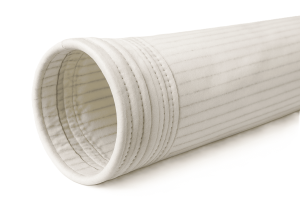 ■ Reduction of electrostatic charge accumulation
■ Improved safety in explosion-risk zones
■ Stable dust collection performance under continuous operation
■ Support for documented plant risk-assessment and safety controls
Dust filtration remains one element of a broader explosion-protection approach, but without appropriate anti-static filtration, overall risk control is fundamentally compromised.
Oils and Fats Filtration in Biscuit and Confectionery Production
Edible oils and fats play a central role in biscuit and confectionery production, influencing texture, mouthfeel, flavour release, and shelf stability. These media are susceptible to thermal degradation, oxidation by-products, and particulate contamination.
Effective filtration in biscuit and confectionery production for oils and fats must accommodate elevated temperatures, variable viscosity, and food-contact requirements while maintaining predictable pressure behaviour.
Foreign-Body Control and Metal Contamination Prevention

Foreign-body control is a key requirement in large-scale food manufacturing. Metal contamination can originate from raw materials, conveying equipment, milling operations, or mechanical wear.
Sanitary magnetic separators provide an effective first line of defence by removing ferrous contaminants from both dry and liquid ingredient streams before they reach critical processing stages. Properly deployed, magnetic separation protects equipment and strengthens food safety programmes.
Where FiltraCore Asia Fits
FiltraCore Asia supports biscuit and confectionery manufacturers by addressing high-risk production zones with application-specific filtration solutions engineered for real plant conditions, including hygiene-driven installation requirements.
For liquid ingredient filtration, LFX-PP™ (Polypropylene Filter Bags) and LFX-PE™ (Polyester Filter Bags) are commonly applied to edible oils, fats, syrups, and coatings for bulk solids removal and process stabilisation. Where finer filtration or polishing is required prior to spraying, coating, or deposition, LFX-CMB™ depth filter cartridges and LFX-CPLEAT-PP™ pleated filter cartridges provide controlled particulate retention with predictable pressure behaviour.
To ensure hygienic integration and safe operation in food-contact areas, FiltraCore Asia supplies HFX™ Stainless-Steel Sanitary Filter Housings configured for hygiene-grade connections such as SMS 1145 and Tri-Clamp. These hygienic connection standards support reliable sealing, controlled changeout, and cleanability in liquid ingredient lines where hygiene expectations and audit requirements are stringent.
In dry processing and flour-handling environments, DFX-ANT™ Antistatic Dust Filter Bags are deployed in dust extraction systems to control airborne flour and sugar dust while mitigating electrostatic ignition risk in combustible dust environments.
For foreign-body control, FiltraCore Asia’s HFX-MAGSEP-SAN™ in-line or chamber-type magnetic separators are installed in both dry ingredient chutes and liquid transfer lines to capture ferrous contamination before it reaches food-contact equipment.
Air quality within production and packaging zones is supported by AFX-PLT™ pleated panel filters (and other AFX™ configurations where required) applied in HVAC and local air-handling systems to reduce dust migration and support hygiene control.
All filtration elements and housings can be supplied in food-contact compliant variants, with material options suitable for applications requiring alignment with FDA 21 CFR and EU food-contact regulations, where specified.
The objective is to engineer a coordinated, compliance-ready filtration architecture that strengthens food safety, dust risk control, and operational reliability across high-throughput biscuit and confectionery production.
Filtration in Biscuit and Confectionery Production as a Foundation of Safe, Scalable Food Manufacturing
In filtration in biscuit and confectionery production, performance is reflected directly in audit outcomes, line uptime, and product consistency. Plants that integrate filtration into process design—rather than reacting to failures—achieve safer operations, fewer disruptions, and stronger long-term control.
Filtration, when correctly engineered, becomes an invisible but essential enabler of scalable food manufacturing.
Conclusion: Engineering Filtration for Modern Biscuit and Confectionery Plants
Filtration in biscuit and confectionery production must simultaneously address liquid quality, dust explosion risk, air cleanliness, and foreign-body control. By applying staged filtration, selecting appropriate media, and deploying safety-critical dust and air filtration systems, manufacturers can protect food safety, plant safety, and production efficiency.
FiltraCore Asia supports biscuit and confectionery producers with application-driven filtration solutions designed around real production challenges — helping manufacturers maintain control, consistency, and confidence across every batch and every line.
For readers seeking a comprehensive technical overview of biscuit manufacturing processes and the underpinning food science principles, the ScienceDirect topic page on biscuit manufacture offers a curated compilation of authoritative definitions, process descriptions, and context for key unit operations. While the resource is academic in nature, its summaries of stages such as mixing, baking, and quality control complement the practical filtration considerations discussed in this article and provide additional background for those interested in the broader science of biscuit production.