
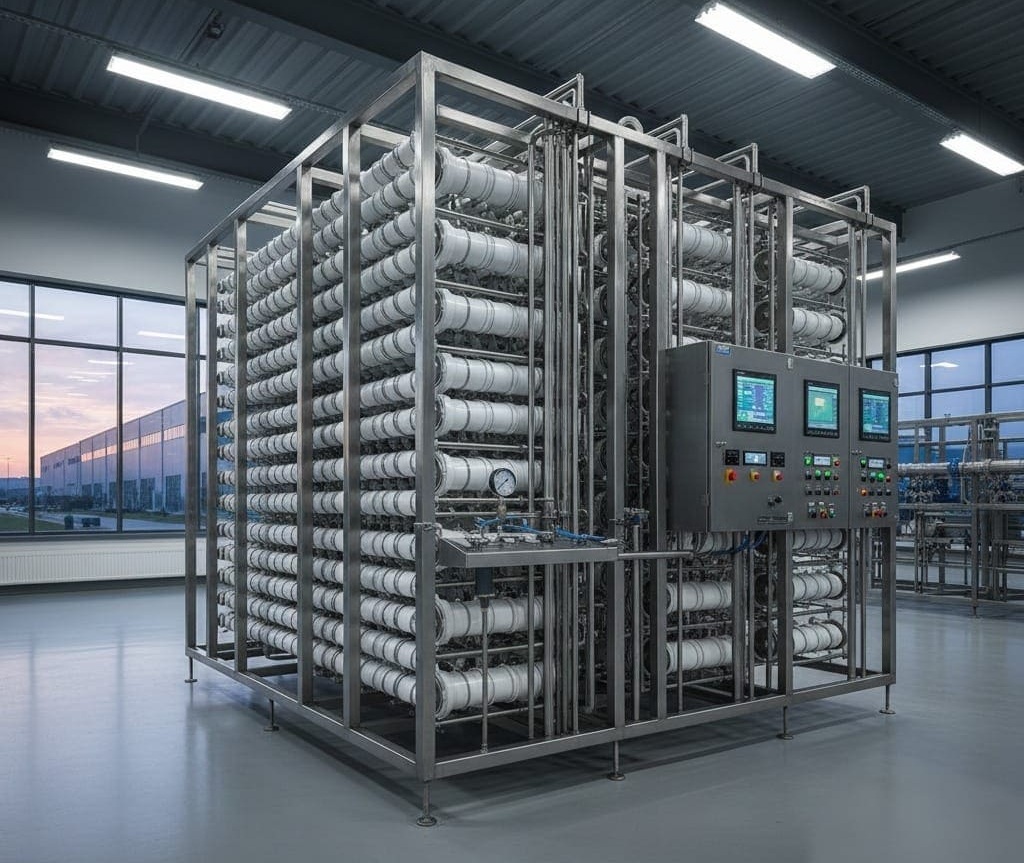
Precision Filtration In Water Treatment
By FiltraCore Asia — Technical Insights Series
Precision Filtration In Water Treatment: Introduction and System Context
Precision Filtration In Water Treatment is a critical engineering control in modern water treatment systems, bridging the gap between coarse pretreatment and fine or membrane-based filtration processes. Often implemented as cartridge or security filtration, this filtration stage removes suspended solids, colloids, and fine particulates that would otherwise compromise downstream equipment integrity, treatment efficiency, and final water quality.
As water treatment standards tighten across industrial, municipal, and process applications, Precision Filtration In Water Treatment has evolved from a secondary safeguard into a core system design requirement. When correctly specified, it improves process stability, protects critical assets, and ensures consistent treatment performance under real operating conditions.
What Is Precision Filtration In Water Treatment?
Precision Filtration In Water Treatment refers to liquid filtration using replaceable filter cartridges installed within pressure-rated filter housings, designed to remove fine particulate contaminants within a defined micron range. Typical filtration ratings range from approximately 0.5 µm up to 100 µm, depending on media type and application requirements.
Unlike sand or multimedia filters, which rely on depth beds and backwashing, precision filtration systems use controlled-geometry filter elements such as melt-blown, string-wound, pleated, or carbon cartridges. This enables predictable retention performance, compact system footprints, and straightforward maintenance without media regeneration.
In water treatment systems, this filtration approach is commonly deployed as pretreatment before membranes, final polishing before reuse or discharge, and process protection for pumps, valves, and instrumentation.
Key Characteristics of Precision Filtration Systems
Precision filtration systems are valued for their balance of performance, simplicity, and flexibility. Key characteristics include stable filtration efficiency, compact design, and compatibility with a wide range of water chemistries.
Because filtration occurs through engineered cartridge media, Precision Filtration In Water Treatment delivers consistent particulate removal without the operational complexity of backwashing or media replacement. When paired with properly designed filter housings, these systems provide reliable sealing, safe cartridge changeout, and repeatable performance over long operating cycles.
From an operational perspective, precision filtration supports low pressure drop, predictable loading behaviour, and scalable capacity by increasing cartridge count rather than vessel size.
Working Principle of Precision Filtration In Water Treatment
The operating principle of Precision Filtration In Water Treatment is straightforward but highly effective. Under system pressure, feed water flows through the filter cartridge media. Suspended solids and particulates are retained within or on the surface of the media, while clarified water exits the housing.
Depending on cartridge construction, filtration may occur via depth filtration, surface filtration, or hybrid mechanisms combining both effects. As contaminants accumulate, differential pressure across the cartridge increases, signalling cartridge replacement to maintain stable filtration performance without breakthrough.
Filtration Range and System Placement
In water treatment system design, Precision Filtration In Water Treatment typically sits between coarse pretreatment and fine separation processes. It is finer than multimedia or sand filtration, yet less restrictive than membrane systems.
This positioning allows precision filtration systems to remove residual solids that bypass upstream treatment, protect membranes from fouling and abrasion, and stabilise turbidity before critical process steps. Typical micron ranges for water treatment applications span from 1–50 µm, selected based on feed water quality, downstream sensitivity, and overall treatment objectives.
Classification of Precision Filtration In Water Treatment by Application
Precision Filtration In Water Treatment systems can be broadly classified by function rather than arbitrary grades, with selection driven by performance requirements rather than terminology.
Common classifications include:
-
Pretreatment precision filtration, focused on protecting downstream equipment
-
Polishing filtration, targeting turbidity reduction and clarity control
-
Process filtration, supporting industrial water reuse or closed-loop systems
Different cartridge constructions and materials are selected depending on whether the priority is dirt-holding capacity, fine particle retention, chemical compatibility, or service life.
Performance Considerations in Precision Filtration Systems
The performance of a precision filtration system is determined not only by micron rating, but by how well the cartridge, housing, and operating conditions are matched to the application.
Key performance considerations include pressure drop behaviour, flow distribution across cartridges, sealing integrity, and cartridge loading characteristics. Poor housing design or uneven flow can negate the benefits of high-quality filter media.
When correctly engineered, Precision Filtration In Water Treatment delivers stable particulate control, protects downstream assets, and reduces the frequency of unplanned maintenance events.
Applications of Precision Filtration In Water Treatment
Precision Filtration In Water Treatment is widely applied across industrial process water, utilities, food and beverage, pharmaceuticals, chemicals, electronics, and environmental treatment systems.
Typical applications include raw water pretreatment, cooling water filtration, boiler feedwater protection, wastewater polishing, and water reuse systems. In each case, precision filtration acts as a control point that improves reliability and consistency rather than attempting to replace upstream treatment steps.
How to Select Precision Filtration In Water Treatment Systems
Selecting Precision Filtration In Water Treatment starts with understanding failure modes rather than simply choosing a micron rating. Key selection factors include feed water quality, particulate characteristics, flow rate, operating pressure, and downstream sensitivity.
Equally important is housing design. Proper sealing, venting, drainage, and safe cartridge changeout are essential for maintaining hygiene, preventing bypass, and ensuring operator safety. Precision filtration is most effective when integrated into a staged treatment strategy, where each filtration step supports the next.
Where FiltraCore Asia’s LFX™ Precision Filtration In Water Treatment Fits
FiltraCore Asia supports Precision Filtration In Water Treatment through its LFX™ Series of liquid filter cartridges, engineered for precision filtration duties across a wide range of industrial and utility water systems. The LFX™ range includes cartridge options suitable for both depth and surface filtration, enabling engineers to match filtration performance precisely to application requirements.
LFX™ cartridges are commonly deployed in pretreatment and polishing stages, where stable particulate removal and predictable pressure behaviour are critical. When paired with FiltraCore Asia’s HFX™ Filter Housings, these systems deliver reliable sealing, controlled flow distribution, and consistent long-term performance under continuous operation.
Conclusion: Precision Filtration In Water Treatment as a Core Control
Precision Filtration In Water Treatment is an essential component of modern water treatment systems, providing controlled particulate removal, asset protection, and process stability. When correctly specified and integrated, it reduces operational risk and supports consistent treatment outcomes across varying water qualities.
Rather than acting as a standalone solution, this filtration approach performs best as part of a staged treatment architecture—bridging coarse pretreatment and fine separation processes. With the right combination of cartridge media, housing design, and system integration, precision filtration becomes a dependable, engineering-driven control point in water treatment operations.
For readers interested in recent academic research on filtration and separation processes, a peer-reviewed study published on ScienceDirect provides additional technical insight into advanced filtration mechanisms, material performance, and system behaviour under real operating conditions. The paper offers a research-driven perspective that complements practical engineering approaches to precision filtration in water and process applications.