

Wine Filtration Systems: Process Stability, Engineering Control, and Bottling Reliability
By FiltraCore Asia — Technical Insights Series
Introduction: Filtration in Winemaking Is a System Discipline
In modern winemaking, filtration is not a corrective step applied at the end of production. It is a process discipline used to manage suspended solids, protect equipment, stabilise wine prior to bottling, and reduce microbiological risk without compromising sensory integrity. In practice, wine filtration systems are designed to balance particulate control, process stability, and bottling reliability rather than maximise filtration intensity.
Problems such as unstable flow rates, rapid filter blockage, excessive wine loss, or late-stage quality defects are rarely caused by a single “wrong filter.” They are almost always the result of poorly staged filtration, where fine filters are forced to compensate for inadequate upstream solids control.
Well-designed wineries therefore treat filtration as a progressive, staged system, aligned with the natural evolution of the wine from fermentation through to bottling.
Where Filtration Fits in the Winemaking Process
After fermentation, settling, and racking, wine typically still contains fine lees, colloids, and haze-forming particles. These components may not be visually obvious but can affect bottling performance, shelf stability, and microbiological safety.
Filtration is commonly applied at several points:
-
During wine transfers, to protect pumps and piping
-
After clarification, to stabilise turbidity
-
Immediately before bottling, to control particulate and microbial risk
The objective is not maximum filtration intensity, but predictable filterability and consistent bottling behaviour.
Stage 1: Coarse Filtration for Solids Load Reduction
The first filtration stage focuses on bulk solids control, not clarity. Typical targets include lees fragments, tank debris, and particulate carryover that would otherwise overload finer filters.
This stage stabilises incoming solids load and protects downstream filtration media. It is commonly achieved using robust bag filters or coarse depth cartridges selected based on solids concentration and variability rather than micron rating alone.
Effective coarse filtration reduces pressure shocks, minimises premature blinding, and improves overall system stability.
Stage 2: Depth Filtration for Clarification
Depth filtration is the primary clarification step in most wineries. By capturing particles throughout the thickness of the filter media, depth filters tolerate higher particulate loading and provide stable differential pressure behaviour.
This stage is used to reduce turbidity and remove fine suspended solids that would compromise polishing or final filtration. Attempting to bypass depth filtration typically results in rapid blockage of downstream cartridges or membranes.
From an engineering perspective, depth filtration is the workhorse of winery filtration systems.
Stage 3: Polishing Filtration to Protect Final Filters
Once bulk solids and turbidity are controlled, polishing filtration is applied to produce a consistently “filterable” wine. This stage is designed to protect final bottling filters rather than achieve sterility.
Pleated cartridges or fine depth media are commonly used, selected to balance flow rate, pressure stability, and wine loss. The goal is to minimise particulate load entering final filtration so that bottling performance remains predictable.
Polishing is often the difference between stable bottling runs and repeated shutdowns.
Stage 4: Final Filtration Prior to Bottling
Where microbial control is required at packaging, wineries typically apply membrane filtration immediately upstream of the filler. Industry practice commonly uses 0.65 µm or 0.45 µm absolute-rated membranes, depending on wine style, stability objectives, and regulatory or market requirements.
Final filtration should act as a safeguard, not a corrective step. When upstream clarification and polishing are properly executed, final filters operate with stable flow, minimal wine loss, and consistent service life.
Crossflow Filtration as a Clarification Option
Many wineries incorporate crossflow (tangential flow) filtration as an alternative or complement to conventional depth filtration. Crossflow systems reduce cake formation by sweeping solids along the membrane surface, allowing continuous clarification under suitable operating conditions.
While effective, crossflow filtration still requires disciplined upstream management, realistic throughput expectations, and rigorous cleaning protocols. It is not a universal replacement for staged filtration design, but one of several clarification tools available to winemakers.
Key Engineering Principles in Wine Filtration Design
Successful wine filtration systems are built around load management, not aggressive micron reduction. Fine filters fail quickly when forced to handle excessive particulate load.
Effective design focuses on:
-
Progressive reduction of solids load
-
Stable differential pressure behaviour
-
Minimising wine loss during changeouts
-
Matching filtration intensity to wine condition, not theoretical limits
Over-specifying filtration rarely improves outcomes; it usually increases cost and operational risk.
Where FiltraCore Asia’s LFX™ Cartridge Filtration Fits
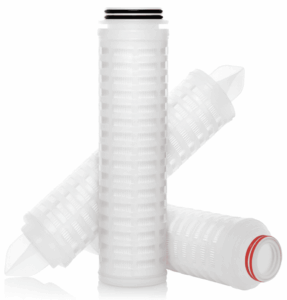
FiltraCore Asia’s LFX™ Series supports staged wine filtration by providing cartridge solutions suitable for coarse filtration, depth clarification, and polishing duties. Depth-style LFX™ cartridges are applied upstream to manage particulate load and stabilise flow, while pleated LFX™ cartridges are used downstream to protect final bottling filtration.
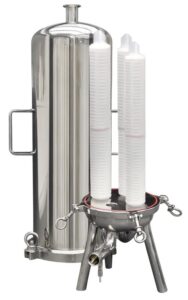
When paired with HFX™ stainless steel sanitary filter housings, the system prioritises reliable sealing, safe changeout, and consistent performance under winery operating conditions. The emphasis is on system stability and predictability rather than aggressive filtration.
Conclusion: Filtration as a Reliability Tool in Winemaking
In the wine industry, filtration determines far more than visual clarity. It influences bottling uptime, wine loss, microbiological stability, and long-term product consistency.
Wineries that engineer filtration as a staged system, aligned with solids behaviour and process flow, achieve more reliable bottling runs, fewer late-stage quality issues, and lower operating cost per litre. Filtration, when correctly applied, becomes a quiet but critical contributor to wine quality from tank to bottle. When engineered correctly, wine filtration systems support consistent quality, predictable throughput, and long-term operational reliability.
For readers interested in recent peer-reviewed research on filtration and separation technologies relevant to liquid processing, a study published on ScienceDirect provides additional insight into modern filtration mechanisms, material behaviour, and system performance considerations. The paper offers a research-focused perspective that complements practical engineering approaches used in industrial and beverage filtration applications.