
Cosmetic Manufacturing Purified Water System – 7 Critical Steps for Stable, High-Purity GMP Performance
By FiltraCore Asia — Technical Insights Series
Cosmetic manufacturing depends heavily on purified water as a controlled raw material under Cosmetic GMP and ISO 22716. Stability, hygiene, and microbial discipline matter more than pharmaceutical-level ultra-purity. A correctly engineered cosmetic manufacturing purified water system must therefore provide consistent conductivity control, hygienic recirculation, and zero stagnation while meeting practical production requirements for serums, creams, and emulsions.
The global benchmark solution remains a Double-Pass Reverse Osmosis (DPRO) system paired with a hygienic recirculation loop. FiltraCore Asia engineers these systems with one guiding principle: stability beats over-specification. To stay within Cosmetic GMP expectations, water must maintain conductivity below 5.0 µS/cm at 25°C, microbial load below 100 CFU/mL, and recirculation velocity above 1.5 m/s — all while eliminating dead legs through hygienic design.
A well-engineered cosmetic manufacturing purified water system must therefore deliver consistent ionic control, microbial stability, and hygienic recirculation without unnecessary pharmaceutical overspecification.
Feed-Water Basis: Why Singapore PUB Water Is Ideal
Singapore PUB municipal water is one of the most consistent, high-quality municipal supplies globally. The 2024 water report confirms:
• Conductivity: 226 µS/cm average (range: 81–558 µS/cm)
• Hardness (CaCO₃): 44 mg/L average
• Silica: 1.16 mg/L
• TOC: 0.90 mg/L
• Residual Chlorine: 2.27 mg/L
• Turbidity: 0.15 NTU
• pH: 8.0
Engineering implications are straightforward:
• Activated carbon is mandatory for dechlorination.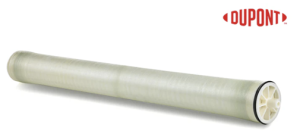
• Conductivity fluctuations require conductivity-based auto-divert.
• Hardness and silica levels allow a softener-free design at 250–500 LPH, provided that a precise antiscalant dosing regimen (D-101) is implemented to protect the DuPont™ FilmTec™ Reverse Osmosis (RO) Membranes from hardness and silica scaling.
• Low TOC supports effective 254 nm UV polishing.
This feed-water quality makes Singapore an excellent environment for operating a stable cosmetic manufacturing purified water system.
Where industrial water or groundwater is used instead, hardness, TDS, and silica data become necessary for RO recovery optimisation.
Pretreatment: Creating the Right Environment for RO
The pretreatment system is intentionally simple and robust:
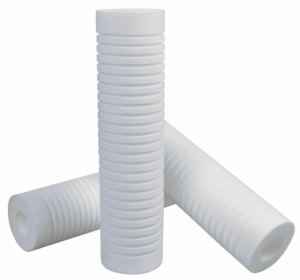

• Sediment filter (5–10 µm)
• SS316L activated carbon filter (dechlorination)
• 1–5 µm security cartridge filter
This ensures chlorine-free, low-turbidity water enters the first RO stage, protecting the FilmTec™ membranes and stabilising rejection rates.
Passivation & Rouge Prevention
All SS316L wetted surfaces undergo a documented chemical passivation protocol following installation and welding. This ensures the chromium oxide layer is fully restored, minimises rouge formation, and preserves Ra performance. Passivation logs are recorded for GMP compliance.
RO Pass 1: Primary Reduction (RO-101)
The first RO pass removes most dissolved ions, hardness, silica, and TOC. Conductivity typically drops by 90–98%. FiltraCore Asia’s system uses Grundfos® CRN SS316L high pressure pumps and FilmTec™ 4040 membranes for stable and predictable performance.
RO-101 forms the foundation of the cosmetic manufacturing purified water system by removing the bulk ionic load before the final polishing stage. A NaOH inter-stage dosing port (D-102) is included as a Recommended Provision, representing FiltraCore’s Kodawari approach.
Inter-Stage CO₂ Behaviour: Why D-102 Matters
Singapore PUB water generally has a pH of 7.0–8.5, where inorganic carbon exists mainly as bicarbonate. RO-101 rejects bicarbonate extremely well. However, as permeate exits RO-101, alkalinity falls and the pH drops — allowing bicarbonate to convert into dissolved CO₂. RO membranes cannot reject CO₂ gas, so it passes into RO-102 and re-ionises, raising final conductivity.
Without D-102 active: 2.0–4.5 µS/cm is typical, but with a tight GMP margin.
With D-102 active: CO₂ is converted to bicarbonate, enabling rejection and delivering < 1.0 µS/cm with a wide GMP safety buffer.
This is why D-102 is included as a provision — future-ready, not mandatory.
RO Pass 2: Final Polishing (RO-102)
The second RO pass stabilises water quality and consistently delivers Cosmetic GMP-grade conductivities.
A temperature-compensated conductivity transmitter ensures accurate ionic measurement.
Sanitary Pneumatic Diaphragm 3-Way Divert Valve (DV-201)
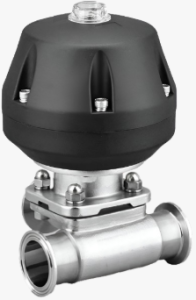 Many low-grade systems use ball valves that create pockets and violate hygienic standards. FiltraCore uses a sanitary pneumatic diaphragm 3-way valve, ensuring:
no dead legs
complete drainability
hygienic geometry
instant fail-safe diverting
DV-201 protects the tank from off-spec permeate and anchors GMP compliance.
In a cosmetic manufacturing purified water system, the divert valve is one of the most important components for purity assurance.
Hygienic Storage & Recirculation Loop
The recirculation loop is a critical part of any cosmetic manufacturing purified water system because its velocity and hygienic geometry determine long-term microbial stability. The hygienic tank is SS316L, conical-bottom, fully drainable, with an internal sprayball, 0.22 µm vent filter, and Ra ≤ 0.6 µm internal finish.
Loop velocity is engineered to exceed 1.5 m/s — a critical threshold for preventing microbial adhesion.
2D Rule Compliance
FiltraCore designs the system using the ASME BPE-aligned 2D Rule, ensuring that no dead leg exceeds twice the diameter of the pipe.
Velocity + 2D compliance = biofilm prevention.
Orbital Welding & Boroscoping
All hygienic piping is joined with Automatic Orbital Welding, and representative welds undergo boroscope inspection for documentation and GMP acceptance.
Cold Loop Sanitisation Reality
Because ambient-temperature “cold loops” are inherently prone to biofilm over time, FiltraCore includes scheduled sanitisation cycles (chemical or optional heat sanitisation) to maintain long-term hygienic control.
Valve Architecture & Biofilm Control
FiltraCore standardises sanitary pneumatic diaphragm valves across all permeate and recirculation lines. These valves eliminate pockets and ensure drainability — essential for maintaining microbial counts below 100 CFU/mL.
Multi-port valves are excluded due to stagnant volumes and hygienic non-compliance.
UV Sterilisation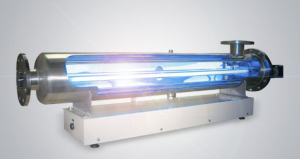
A 254 nm UV module installed after the distribution pump provides continuous microbial suppression and controls TOC rebound typically associated with tank residence time.
Instrumentation & Calibration
All instruments — conductivity, flow, and TOC — use tri-clamp sanitary fittings for easy removal and annual NIST-traceable calibration, ensuring audit-ready performance under Cosmetic GMP.
Automation & Controls
A Siemens-class PLC governs:
• temperature-compensated conductivity monitoring
• automatic divert logic
• pump protection
• UV lamp monitoring
• tank level control
• event logging
Optional CIP modes are available.
Technical Performance Summary
| Parameter | Cosmetic GMP Target | FiltraCore Engineering Standard |
|---|---|---|
| Conductivity | < 5.0 µS/cm | < 1.3 µS/cm (with D-102 Dosing) |
| Microbial Limit | < 100 CFU/mL | < 10 CFU/mL (Design Target) |
| Surface Finish | Ra < 0.8 µm | Ra ≤ 0.6 µm (electro-polished optional) |
| Dead Legs | < 3D | < 2D (ASME BPE compliant) |
| Loop Velocity | > 1.2 m/s | > 1.5 m/s (turbulent flow) |
Process Flow of a Cosmetic Manufacturing Purified Water System (Summary)
Feedwater → Pretreatment → RO-101 → D-102 (Provision) → RO-102 → Conductivity monitoring → DV-201 Divert → Hygienic Tank → Pump → Inline UV → Recirculation Loop → Sprayball Return
Conclusion
A cosmetic manufacturing purified water system must do more than achieve low conductivity—it must remain stable, hygienic, and audit-ready under continuous Cosmetic GMP usage.
FiltraCore Asia engineers cosmetic purified water systems around hygienic geometry, microbial stability, conductivity discipline, and future-proof safeguards. These systems are not ordinary water filtration assemblies — they are high-purity fluid engineering solutions shaped specifically for cosmetic GMP environments. Through zero-stagnation design, high-velocity recirculation, precise valve selection, and optional CO₂ management, FiltraCore ensures consistent, safe, and audit-ready water quality for every skincare or personal-care product manufactured.
To support readers who want a deeper scientific understanding of purified water standards, global definitions, and pharmacopeial expectations, an external reference on ScienceDirect provides a concise overview of how purified water is produced, regulated, and used in manufacturing environments. It offers useful background reading on treatment methods, microbial limits, and quality specifications across various industries.
If your cosmetic or personal-care facility requires a cosmetic manufacturing purified water system engineered for GMP stability, microbial control, and long-term reliability, FiltraCore Asia provides design, optimisation, and implementation support tailored for modern manufacturing environments. Contact us for a technical review or system specification discussion.