
Aluminium Manufacturing Filtration: 5 Critical Controls for Stable and Efficient Operations
Extrusions, Fabrication, Surface Finishing, and Castings — Engineered for Operational Stability
By FiltraCore Asia — Technical Insights Series
Introduction: Why Aluminium Manufacturing Filtration Quietly Governs Process Stability
Aluminium manufacturing is often discussed in terms of presses, furnaces, machining centres, and finishing lines. In practice, however, long-term stability across these operations is governed just as much by what flows through fluids, air, and water systems as by the equipment itself.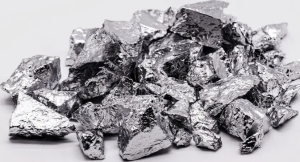
Aluminium manufacturing filtration plays a critical role in stabilising extrusion, fabrication, surface finishing, and casting operations across modern aluminium plants.
Filtration rarely stops a line outright when it fails. Instead, it degrades performance quietly: surface defects increase, bath life shortens, tool wear accelerates, waste volumes rise, and water consumption escalates. By the time filtration is blamed, the damage has often already been done upstream.
This article examines aluminium manufacturing filtration not as a consumable or auxiliary component, but as process infrastructure across the aluminium value chain — from extrusion through fabrication, surface finishing, and casting — focusing on how disciplined filtration design stabilises operations, protects assets, and reduces avoidable waste.
Design Objective: Process Stability, Not Fluid “Cleanliness”
The primary objective of aluminium manufacturing filtration is not to make fluids “clean” in an abstract sense. It is to stabilise processes.
Effective filtration must:
• Protect high-value equipment from contamination-driven wear
• Prevent defect formation downstream
• Extend the usable life of coolants, baths, and rinse water
• Maintain predictable hydraulic behaviour
• Reduce the volume and volatility of waste streams
Micron ratings alone do not achieve these outcomes. Filtration decisions must be driven by process role, loading behaviour, and failure modes, not catalogue specifications.
Aluminium Extrusions: Hydraulic Integrity and Cooling Circuit Protection
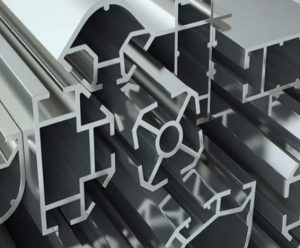 Extrusion operations place extreme demands on both hydraulic and cooling systems.
High-pressure hydraulic circuits are intolerant of contamination. Fine particulate ingress accelerates seal wear, destabilises servo valves, and shortens pump life. Many extrusion “mechanical failures” can ultimately be traced back to insufficient upstream fluid cleanliness.
Cooling and quench water systems face a different challenge. Aluminium fines, oxide scale, and debris accumulate continuously, degrading heat-transfer efficiency and increasing fouling rates. Left unmanaged, this contamination migrates into downstream heat exchangers and piping, increasing maintenance frequency and energy consumption.
In extrusion environments, aluminium manufacturing filtration functions as asset protection, not refinement. Robust solids interception, predictable pressure behaviour, and compatibility with high temperatures and variable loading are more important than fine nominal ratings.
Fabrication and Machining: Coolant Stability and Tool-Life Preservation
Fabrication and machining operations generate some of the most demanding liquid filtration conditions in aluminium plants.
Metalworking fluids are exposed to: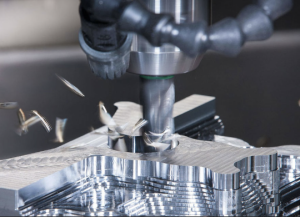
• High and variable solids loading from aluminium fines
• Tramp oil ingress
• Thermal cycling
• Microbial growth risk
Over-filtration at this stage is a common mistake. Applying excessively fine media upstream causes rapid surface blinding, unstable differential pressure, and flow starvation, often shortening coolant life rather than extending it.
Effective systems distinguish between sacrificial load-bearing filtration, which absorbs solids variability, and conditioning filtration, which stabilises the fluid once bulk contamination is controlled. This staged approach is central to effective aluminium manufacturing filtration, preserving coolant chemistry, protecting tooling, and reducing unnecessary fluid disposal.
Surface Finishing: Where Aluminium Manufacturing Filtration Appears on the Product
Surface finishing is the most filtration-sensitive stage of aluminium manufacturing.
Pretreatment baths, anodising lines, and coating processes are directly affected by particulate contamination, aluminium salts, and drag-out. Even small increases in suspended solids can translate into visible surface defects, adhesion failures, or inconsistent finishes.
Rinse water systems play a critical role here. Poorly managed rinse quality allows contamination to be reintroduced into downstream stages, accelerating bath degradation and increasing chemical consumption.
 Aluminium Manufacturing Filtration performance in surface finishing systems is inseparable from bath chemistry control. In anodising and pretreatment processes, pH drift directly influences the formation and precipitation of aluminium salts and hydroxides, changing both particle size distribution and sludge loading behaviour. As pH moves outside its optimal operating window, dissolved species can rapidly precipitate, overwhelming conditioning filtration stages that were not designed for bulk solids capture. In practice, effective surface finishing requires alignment between pH control and staged filtration, where sacrificial filtration absorbs chemically induced solids variability and conditioning filtration stabilises the bath once chemistry is brought back into control.
In surface finishing, aluminium manufacturing filtration is not a background utility. It is a quality multiplier. Continuous solids control, stable rinse performance, and effective separation of sludge from liquid streams directly influence product appearance and yield.
Aluminium Castings: Cooling Water, Finishing Operations, and Waste Streams
Casting operations introduce additional contamination pathways.
Cooling water circuits accumulate fines and scale, while post-casting cleaning and finishing generate wash water loaded with particulate and oil residues. Without adequate filtration, these contaminants circulate repeatedly, increasing fouling and maintenance burden.
Airborne dust from finishing operations also presents a risk, both to equipment and to workplace conditions. Here, aluminium manufacturing filtration extends beyond liquids, contributing to safer and more stable operating environments.
Sludge, Fines, and Waste Handling: Filtration Determines Waste Volume
Waste volume in aluminium plants is not an inevitability. It is a design outcome.
When solids are allowed to migrate downstream before separation, they become harder and more expensive to manage. Early interception and staged separation reduce overall waste volume and stabilise wastewater characteristics.
Passive dewatering and solids handling approaches, applied outside production zones, can dramatically reduce transport and disposal costs while recovering free water for further treatment or reuse. The effectiveness of these strategies depends directly on upstream aluminium manufacturing filtration discipline.
Process Water Management and Reuse: Filtration as an Enabler, Not a Guarantee
Process water is consumed across aluminium manufacturing in cooling, washing, rinsing, and auxiliary services. Not all of this water must be discarded after a single use.
Controlled reuse depends on segregation and predictability. Filtration prepares water for reuse by removing solids and stabilising quality, but it does not replace hygiene controls, chemistry management, or regulatory validation.
Successful reuse architectures typically involve staged solids removal, followed by conditioning filtration and, where required, polishing before water is returned to clearly defined non-critical applications. Over-reliance on fine filtration without upstream control is a common cause of reuse system failure.
Instrumentation and Control: Why Filtration Without ΔP Is Guesswork
One of the most common weaknesses in industrial filtration systems is the absence of meaningful instrumentation.
Without stage-by-stage differential pressure monitoring, operators cannot determine where loading is occurring. Media are replaced blindly, downstream stages are discarded prematurely, and developing failures remain invisible until they become disruptive.
Differential pressure transforms aluminium manufacturing filtration from a consumable expense into a measurable process variable, enabling predictive maintenance and informed intervention.
Conclusion: Filtration as Invisible Infrastructure
In aluminium manufacturing, filtration does not add value in a visible way. It prevents value loss.
When engineered correctly, aluminium manufacturing filtration systems operate quietly in the background, preserving surface quality, protecting assets, stabilising fluids, and reducing waste. When engineered poorly, they become the hidden root cause behind defects, downtime, and escalating operating costs.
The most reliable aluminium operations are those that treat filtration not as an afterthought or a line-item purchase, but as invisible infrastructure — designed with the same discipline as presses, furnaces, and finishing lines.
For readers interested in deeper scientific perspectives on flow behaviour, mass transfer, and particulate dynamics relevant to industrial filtration systems, a peer-reviewed study available on ScienceDirect explores key mechanisms affecting filtration performance and contaminant transport. This external research complements the engineering insights discussed above by providing foundational understanding of how solids and dissolved species interact with filtration media under process conditions. Explore the full article on ScienceDirect.
Product Mapping: FiltraCore Solutions Aligned to Aluminium Manufacturing Filtration^
The filtration roles described in this article are supported by FiltraCore Asia’s engineered product ranges. Products are mapped by process function and loading behaviour, not by generic micron claims.
1. Aluminium Extrusions
Hydraulic systems, cooling circuits, press hall environment
Filtration objectives
-
Protect hydraulic components from particulate wear
-
Control aluminium fines and oxide scale in cooling water
-
Maintain predictable pressure behaviour
Relevant FiltraCore solutions
-
LFX-PP™ / LFX-PE™ – Polypropylene & Polyester Filter Bags
For bulk solids interception in cooling and service water circuits. -
LFX-SS™ – Stainless Steel Mesh Filter Bags
For coarse interception in high-temperature or reusable applications. -
HFX-SS-BF-SB™ / HFX-SS-BF-MB™ – Stainless Steel Bag Filter Housings
Supporting controlled, maintainable liquid filtration architecture. -
AFX™ Series – Air & Mist Filtration
For oil mist and airborne particulate control in extrusion environments.
2. Fabrication & Machining
Coolants, lubricants, metalworking fluids
Filtration objectives
-
Absorb high and variable aluminium fines loading
-
Stabilise coolant quality without flow starvation
-
Extend tool and fluid life
Relevant FiltraCore solutions
-
LFX-BCL™ – Coolant & Lubricant Filter Bags
Sacrificial, load-bearing filtration for high-solids coolant systems. -
LFX-MB™ – Meltblown Depth Filter Bags
Conditioning filtration once bulk solids are controlled. -
HFX-SS-BF-SB™ – Stainless Steel Bag Filter Housings
For staged coolant filtration with ΔP monitoring capability.
3. Surface Finishing
Pretreatment, anodising, rinsing, coating
Filtration objectives
-
Continuous removal of aluminium salts and oxides
-
Stabilise rinse water quality
-
Protect surface finish consistency
Relevant FiltraCore solutions
-
LFX-PP™ / LFX-PE™ – Chemical-Compatible Filter Bags
For solids removal in pretreatment and rinse systems. -
LFX-ACT™ – Activated Carbon Filter Bags
For odour, colour, and organic contaminant reduction in rinse water and non-critical reuse loops (not in primary chemical baths). -
HFX-PL-GFPP™ / HFX-PL-PVDF™ – Thermoplastic Bag Filter Housings
For chemically aggressive environments requiring corrosion resistance.
4. Aluminium Castings
Cooling water, cleaning, finishing operations
Filtration objectives
-
Protect cooling circuits from particulate fouling
-
Control wash water solids loading
-
Reduce airborne dust
Relevant FiltraCore solutions
-
LFX-SS™ – Stainless Steel Mesh Filter Bags
For coarse solids interception in cooling and wash water systems. -
LFX-PP™ – Polypropylene Filter Bags
For staged filtration prior to discharge or reuse. -
AFX™ Series – Dust & Air Filtration
For particulate control in casting finishing zones.
5. Sludge, Fines, and Waste Handling
Wastewater stabilisation and volume reduction
Filtration objectives
-
Separate solids early to reduce waste volume
-
Stabilise downstream wastewater loading
-
Lower transport and disposal costs
Relevant FiltraCore solutions
-
LFX-PP™ / LFX-PE™ – High-Capacity Filter Bags
For solids separation prior to dewatering. -
ACCSX™ Series – Separation & Waste Handling Accessories
Supporting passive dewatering and solids management in non-production zones.
6. Process Water Management & Reuse
Controlled reuse without process risk
Filtration objectives
-
Stabilise turbidity and solids
-
Prepare water for non-critical reuse
-
Maintain segregation between reuse and product-contact streams
Relevant FiltraCore solutions
-
LFX-PP™ / LFX-MB™ – Staged Depth Filtration
For solids and turbidity control. -
LFX-ACT™ – Activated Carbon Filter Bags
For polishing of reuse water addressing odour, colour, and residual organics. -
HFX™ Series – Filter Housings
Providing controlled, instrumented filtration architecture.
7. Foreign-Body & Metal Contamination Control
Plant-wide preventive protection
Filtration objectives
-
Intercept tramp metal
-
Protect pumps, filters, and downstream equipment
Relevant FiltraCore solutions
-
ACCSX-MAGSEP™ – Magnetic Separation Systems
Installed upstream of critical equipment as a preventive control for ferrous and weakly magnetic contaminants.
^Important Boundary
-
Products are applied by process role, not as blanket solutions.
-
Fine filtration and adsorption media are not substitutes for chemistry control or regulatory validation.
-
Reuse applications must always be validated against site-specific requirements.
Stable aluminium manufacturing depends on filtration systems that are engineered, not improvised.
If you are reviewing fluid stability, surface quality consistency, waste handling, or water management across your operations, FiltraCore Asia works with manufacturers as a technical partner — helping design aluminium manufacturing filtration solutions that protect assets, reduce waste, and support long-term operational stability.