Amine Filtration Systems for Petrochemical Gas Processing: 7 Critical Controls for Stable Operations
By FiltraCore Asia — Technical Insights SeriesWhy Amine Filtration Systems Are Core Process Infrastructure
Amine filtration systems are not auxiliary equipment in petrochemical gas processing. They are a core process control that directly affects absorber efficiency, regenerator stability, corrosion rates, foaming behaviour, and overall unit reliability.
In operating amine units, contamination is continuously generated through corrosion reactions, hydrocarbon ingress, solvent degradation, and mechanical wear. Without effective filtration, these contaminants accumulate in the circulating loop, progressively degrading solvent performance and increasing the likelihood of foaming, fouling, and unplanned shutdowns.
For modern gas treating operations, amine filtration is not about achieving laboratory-grade cleanliness. It is about maintaining system stability under real operating conditions.
Where Contamination Enters Amine Systems
Contamination in amine systems originates from several well-understood mechanisms.
Corrosion products such as iron sulphide and iron oxide are generated internally as acid gases interact with carbon steel surfaces, particularly across temperature gradients between absorbers, exchangers, and regenerators. These fine solids circulate continuously and tend to deposit in low-velocity zones, heat exchangers, and pump clearances.
Hydrocarbon contamination enters the amine loop through aerosol or mist carryover in the sour gas feed. Once introduced, hydrocarbons act as surface-active agents that significantly increase foaming tendency and destabilise mass transfer in the absorber.
Additional particulates arise from degraded linings, gasket materials, mechanical wear debris, and re-entrained deposits during flow transients or upset conditions.
Effective amine filtration systems must address all of these pathways, not just one.
The Operational Cost of Poor Amine Filtration
When contamination is not controlled, amine units exhibit predictable and repeatable failure modes.
Foaming events become more frequent and harder to suppress, leading to solvent losses, absorber flooding, and reduced treating capacity. Heat exchangers foul, increasing energy consumption and forcing premature cleaning. Pumps and control valves experience accelerated wear, raising maintenance costs and downtime. Differential pressure across critical equipment becomes unstable, complicating process control and masking early warning signs of failure.
These symptoms are often treated individually, but their root cause is usually insufficient contamination control within the amine circulation loop.
Filtration as a System Control — Not a Single Device
Amine filtration systems should not be viewed as a single filter installed at a convenient location. They are a system-level control strategy.
The objective is to prevent contaminants from accumulating faster than they can be removed, while maintaining stable hydraulic behaviour and manageable maintenance intervals. Over-aggressive fine filtration can be as damaging as under-filtration, leading to rapid plugging, bypassing, and operational disruption.
A defensible filtration strategy is staged, purpose-driven, and aligned with the plant’s actual failure mechanisms.
Liquid-Side Filtration in Amine Circulation Loops
The liquid side of the amine system is where particulate contamination is most effectively controlled.
Depth filtration is widely applied in amine service because it provides high dirt-holding capacity and stable differential pressure behaviour under continuous duty. By distributing solids throughout the media structure rather than loading the surface, depth filters reduce the risk of sudden blockage and extend service life.
Liquid-side amine filtration is typically positioned to protect heat exchangers, pumps, and reclaimers by intercepting corrosion solids and fines before they can accumulate in high-cost equipment.
The intent is stabilisation, not polishing.
Automated Self-Cleaning Filtration for Continuous Amine Service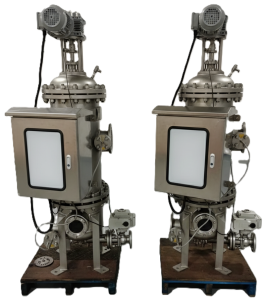
In high-throughput units or environments with persistent corrosion solids generation, manual filter changeouts can become an operational bottleneck.
Automated self-cleaning filter housings are deployed in these cases as side-stream or full-flow solutions. By periodically removing accumulated solids without interrupting circulation, self-cleaning systems maintain stable differential pressure and reduce operator intervention.
In amine service, self-cleaning filtration is not intended to achieve ultra-fine particulate removal. Its role is to control solids concentration and prevent accumulation-driven upsets.
Gas-Side Coalescing: Stopping Hydrocarbon Ingress at the Source
One of the most effective ways to reduce foaming in amine systems is to prevent hydrocarbon contamination from entering the loop in the first place.
Gas-side coalescing filtration is applied upstream of absorbers to remove fine liquid droplets and aerosols from sour gas streams. By intercepting hydrocarbons before they contact the solvent, this stage reduces a primary driver of foaming and solvent instability.
Gas coalescing does not treat the amine itself; it protects the amine system by controlling what enters it.
Where FiltraCore Asia Fits
FiltraCore Asia supports amine filtration systems through process-aligned filtration building blocks, focused on stabilisation rather than over-specification.
On the liquid side, FiltraCore Asia supplies depth filtration solutions engineered for continuous amine circulation service. These are applied to control corrosion solids and fines, protecting heat exchangers, pumps, and reclaimers while maintaining predictable differential pressure behaviour.
Where manual changeout frequency becomes a limitation, FiltraCore Asia’s automated self-cleaning filter housings provide a means of continuous solids removal without interrupting the amine loop. These systems are particularly suited to units with persistent corrosion product generation or high solids loading.
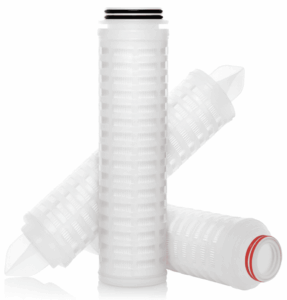
On the gas side, FiltraCore Asia’s LFX™ Series filter cartridges are applied upstream of absorbers to condition incoming gas streams, using depth filtration and surface filtration media—including polypropylene (PP) and polytetrafluoroethylene (PTFE) cartridge options—to remove hydrocarbon aerosols, fine liquid droplets, and particulate contamination before they enter the amine solvent system.
Across all applications, the engineering objective remains consistent: control contamination accumulation, stabilise solvent performance, and reduce the triggers that lead to foaming, fouling, and unplanned shutdowns.
Designing Amine Filtration Systems with Realistic Objectives
Effective amine filtration systems are designed around predictability, not perfection.
Predictable foaming behaviour.
Predictable exchanger cleanliness.
Predictable differential pressure trends.
Predictable maintenance intervals.
By aligning filtration design with real contamination mechanisms and operating realities, plants achieve longer solvent life, improved treating efficiency, and fewer disruptive events.
Conclusion: Filtration as a Reliability Lever in Petrochemical Gas Processing
Amine filtration systems are a reliability lever in petrochemical gas processing. When implemented as an integrated contamination control strategy—combining liquid-side solids control, automated filtration where appropriate, and upstream gas coalescing—filtration quietly delivers measurable improvements in stability and uptime.
For operators seeking to reduce foaming incidents, protect high-value equipment, and maintain consistent treating performance, disciplined amine filtration is not optional. It is part of the process design itself.
For readers who want a deeper technical grounding in how amine systems function within gas treating operations, the ScienceDirect topic page on amine process provides a comprehensive engineering overview. It outlines the principles, typical configurations, and chemical mechanisms behind amine-based gas purification — including how amines absorb acid gases and the operational variables that impact solvent performance. This resource complements the practical filtration strategies discussed in this article by offering broader context on amine chemistry and process design in gas processing applications.