Industrial Liquid Filtration Solution: The Ultimate Guide for Engineers, Procurement & Plant Managers
By FiltraCore Asia — Technical Insights Series
Industrial liquid filter bags play a central role in modern manufacturing, water treatment, chemical processing, and every industry that depends on clean, stable, and predictable liquid quality. Although they appear simple on the surface, these filtration components are deeply technical, engineered for precision, and essential for protecting pumps, equipment, heat exchangers, and downstream systems. Selecting the right filter bag can dramatically improve plant uptime, reduce maintenance cycles, and stabilise quality — yet many facilities still base decisions solely on price or habit. This is why a comprehensive, authoritative guide is necessary.
This Ultimate Guide was created to help engineers, procurement teams, maintenance departments, and plant managers understand the complete picture behind industrial liquid filter bags. It covers filtration science, media selection, micron analysis, flow behaviour, housing compatibility, failure modes, and system optimisation. It also explores how different industries — from automotive to chemicals to food manufacturing — use filter bags in their daily operations.
The objective is simple: give you the clarity, accuracy, and technical depth needed to select the right filtration solution every time.
1. Understanding What Industrial Liquid Filter Bags Actually Do
At the core, industrial liquid filter bags remove contaminants — but their true value goes far beyond just trapping particles. A correctly chosen filter bag stabilises system pressure, improves flow consistency, protects expensive equipment, and ensures that production quality remains predictable.
Every process fluid carries a unique blend of suspended solids, gels, fibres, metal fines, dust, pigments, microplastics, silt, or organic matter. These contaminants can clog pipes, damage seals, erode pumps, and disrupt product quality. A properly engineered filter bag sits inside its housing and intercepts this contamination with controlled permeability, designed porosity, and predictable retention.
In most plants, filtration is the cheapest and easiest way to prevent far more expensive failures. But only if the right bag is chosen.
2. Filtration Principles: How Bag Filtration Works
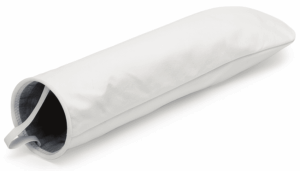
Industrial liquid filter bags rely on depth, surface, or monofilament filtration to capture contaminants. Melt-blown bags retain particles through a graded-density structure, polyester needlefelt captures solids using a deep three-dimensional fibre matrix, while nylon monofilament provides precise, absolute-rated filtration with a woven mesh.
As liquid enters the bag, the fluid disperses across the filtration surface, and particulates are captured progressively. Efficiency depends on fibre density, media construction, liquid viscosity, and flow behaviour. A well-matched filter bag ensures consistent ΔP (pressure drop), predictable clogging patterns, and stable throughput. When incorrectly specified, the bag can blind too quickly, clog unevenly, bypass at the collar, or experience collapse or deformation.
In essence: filtration is a balance between clarity, flow, and dirt-holding capacity — and a filter bag is engineered to manage all three.
3. Selecting the Right Filter Media
The filtration media determines chemical compatibility, temperature resistance, particle retention, and service life.
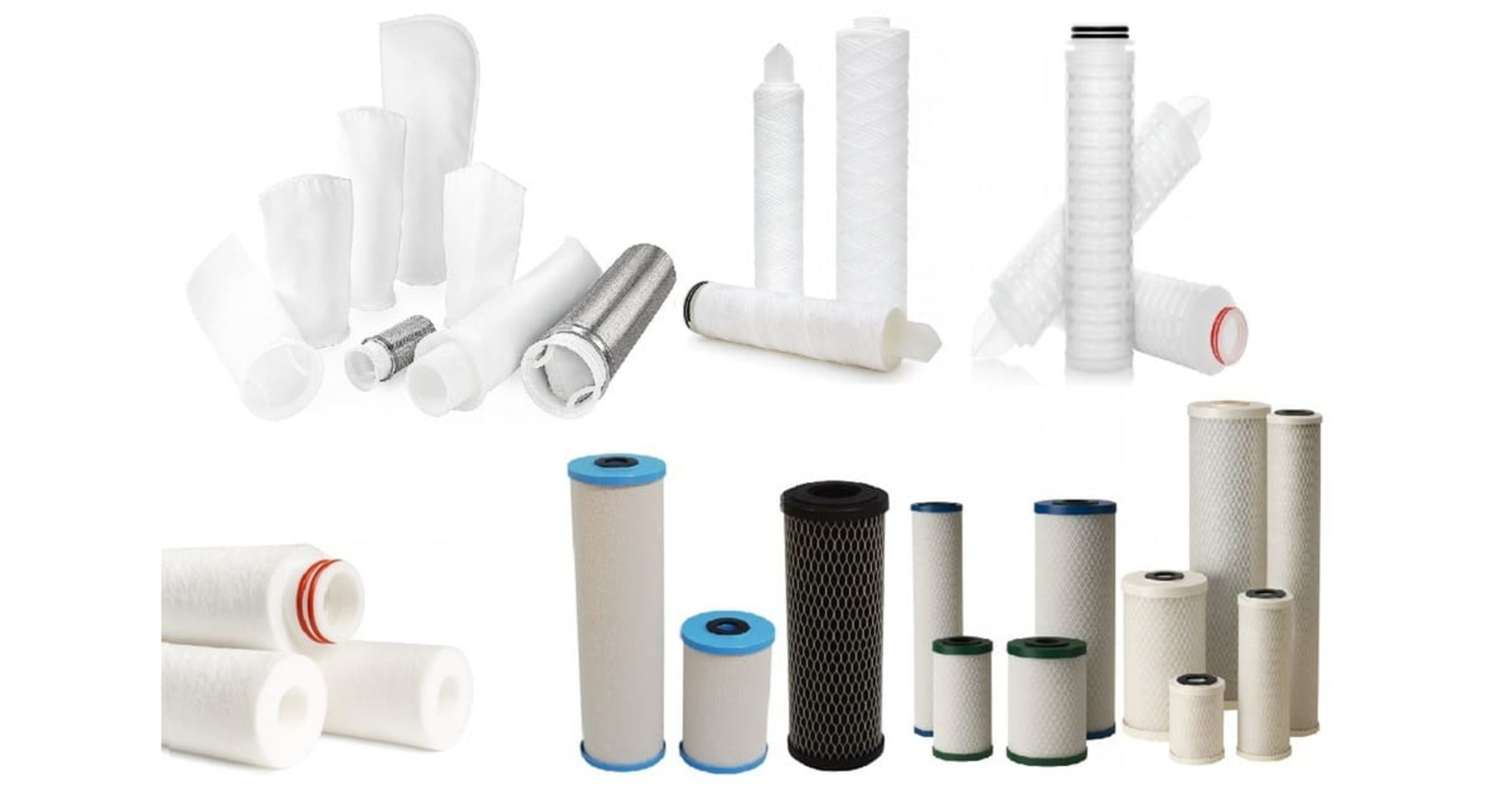
Polypropylene remains the most universal choice, popular for its chemical resistance and affordability. Polyester is chosen for applications requiring greater mechanical strength or higher temperature stability. Nylon monofilament is used for applications needing precise absolute filtration.
More demanding processes call for specialised media. PTFE filter bags offer exceptional chemical resistance for highly aggressive or corrosive liquids. Stainless-steel mesh bags provide complete cleanability for reusable systems and stand up well to abrasive particulates. Activated carbon bags, such as FiltraCore’s LFX-ACT™, are used to remove odour, taste, chlorine, and organic compounds in water treatment and process purification.
Choosing the right media is fundamentally about matching the bag to the environment it will operate in. A mismatch may not be obvious at first, but it will show up in premature clogging, bag failure, or inconsistent filtration quality.
4. Micron Rating: Understanding Particle Retention
One of the most misunderstood aspects of industrial liquid filter bags is micron rating. A lower micron rating does not automatically mean better filtration. It simply means finer particle retention. But finer filtration increases resistance, accelerates clogging, and may require more frequent bag change-outs.
Nominal-rated bags allow a degree of variability in capture efficiency, making them suitable for bulk filtration or pre-filtration. Absolute-rated bags, typically made with monofilament mesh or specialised multi-layer structures, offer consistent and predictable retention for critical processes.
Choosing the wrong micron rating leads to poor performance on both ends: overspecifying causes the bag to clog prematurely, while underspecifying allows contaminants to slip through. The correct choice must consider particle-size distribution, system flexibility, clarity requirements, and operating cost.
5. Bag Construction, Seams, and Collar Design
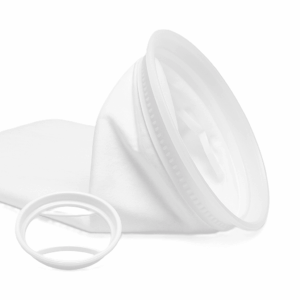
A filter bag’s construction directly influences reliability. Welded seams reduce the risk of bypass and prevent fibre shedding, while stitched seams offer economical options for less demanding systems. Collar design matters just as much: polypropylene, stainless steel, or polyester snap-fit collars ensure that the bag seats securely in the housing.
The top collar must maintain a perfect seal, especially in high-pressure or high-viscosity applications. A poorly fitted collar causes bypass — allowing unfiltered liquid to pass directly into the downstream system.
Advanced filter bag ranges, including FiltraCore’s LFX-PP™, LFX-PE™, and LFX-NMO™, use reinforced collars to ensure consistent seating inside standard-size housings.
6. Housing Compatibility and System Integration
Industrial liquid filter bags are only as effective as the housings they fit into. Bag dimensions — diameter, length, collar type — must match the housing’s specifications. Most systems follow the standard Size 1 and Size 2 formats, but countless variations exist in the market.
Compatibility with legacy brands such as Eaton®, GAF®, and Parker Hannifin® is essential for ensuring leak-free operation. FiltraCore’s LFX™ range is engineered to be drop-in compatible with these global standards, allowing seamless replacement with no system modifications.
Housing design also affects flow distribution. A well-designed housing supports the bag evenly, minimises channeling, and maintains stable ΔP across the entire filtration cycle.
7. Flow Rate, Viscosity, and Pressure Drop
Flow rate is one of the most overlooked elements in selecting industrial liquid filter bags. Excessive flow can force contaminants deeper into the media or deform the bag. High-viscosity liquids — oils, coatings, syrups, resins — require careful micron and media selection to avoid premature clogging.
System designers must evaluate:
- Viscosity at operating temperature
- Expected loading
- Flow distribution across the bag
- Pressure limits of the housing
- Acceptable ΔP range
A well-specified bag enables stable flow throughout its service life. A poorly chosen one will choke early, force pumps to work harder, and disrupt production.
8. Lifecycle Cost and Total Cost of Ownership
Many plants mistakenly choose filter bags purely based on upfront cost. In reality, the cheapest filter bag is rarely the most cost-effective. Total cost includes:
- bag replacement frequency
- downtime for change-outs
- energy cost from pump loading
- impact on downstream systems
- maintenance labour
- disposal costs
A slightly more durable or better-designed filter bag can reduce total cost dramatically. For example, a melt-blown polypropylene bag with a higher dirt-holding capacity may last two to three times longer than a budget alternative, even though its price is only marginally higher.
FiltraCore’s LFX-MB™ Super Long Life Meltblown Bags are engineered precisely for this purpose: to maximise runtime, minimise maintenance, and reduce per-litre filtration costs.
9. Common Failure Modes and How to Prevent Them
Filter bag failures often originate from incorrect specification rather than manufacturing defects. Typical issues include:
- collapse due to high viscosity or insufficient support
- seam failure caused by chemical incompatibility
- bypassing at the collar due to poor housing fit
- premature clogging from overspecification of micron rating
- uneven flow distribution caused by turbulence inside the housing
Preventing these failures requires understanding the relationship between fluid properties, system design, and filter bag construction. A well-engineered bag-housing combination eliminates 95% of these issues.
10. When to Use Bag Filtration vs Cartridge Filtration
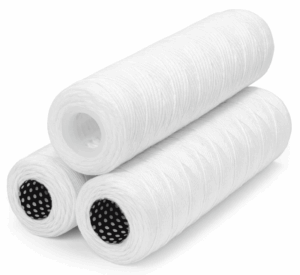
Industrial liquid filter bags excel in bulk filtration, pre-filtration, and general-purpose sediment removal. They offer high dirt-holding capacity, cost-effective operation, and simple change-outs. However, cartridge filtration is more suitable for:
- ultra-fine filtration
- sanitary or high-purity applications
- absolute-rated retention
- multi-stage polishing
- high-pressure systems
Bag and cartridge filtration complement each other, not compete. Many plants use a bag as the first stage and a cartridge as the final clarifier. FiltraCore’s LFX-CMB™, LFX-CSW™, and LFX-CPLEAT-PP™ cartridge ranges are designed for this exact combination approach.
11. Industry-by-Industry Applications
Automotive Manufacturing
Industrial liquid filter bags are essential for paint shops, electrocoat systems, cooling water loops, and parts washing lines. Clean liquids directly reduce paint defects and improve coating uniformity.
- Chemical Processing
Chemical plants rely on materials like polypropylene, polyester, and PTFE to handle harsh solvents, acids, caustics, and complex mixtures. Stability and compatibility are critical here. - Water & Wastewater Treatment
Filter bags remove solids, microplastics, organics, and suspended matter in pre-treatment and polishing stages. Activated carbon bags help with odour and chlorine removal. - Food & Beverage
Used for syrups, ingredients, flavourings, brine solutions, and process water. Food-contact compliant variants are necessary for regulated applications. - Marine & Offshore
Marine systems require corrosion-resistant filter bags that withstand oily bilge water, hydraulic fluids, and seawater contaminants. - Semiconductor & Electronics
Ultra-clean, particle-sensitive processes use absolute-rated bags or monofilament meshes for strict clarity requirements.
Each industry relies on filtration differently, but the principles remain the same: compatibility, stability, efficiency, and predictability.
12. How to Build a Filtration Strategy
A strong filtration strategy considers both the operational environment and the desired clarity level. Engineers must evaluate:
- nature of contaminants
- liquid behaviour under pressure
- temperature fluctuations
- housing capacity
- acceptable downtime
- overall system goals
A properly designed strategy ensures all filters — bags, cartridges, housings — work together rather than in isolation. FiltraCore’s LFX™ and HFX™ ranges are designed to deliver this full-system compatibility.
For industry standards on filtration, refer to official guidelines from the U.S. Environmental Protection Agency (EPA).
13. Conclusion
Industrial liquid filter bags are far more than consumables. They are engineered tools that shape plant performance, product quality, and operational cost. With the right combination of media, micron rating, bag design, housing compatibility, and flow management, your filtration system becomes a stable, predictable, and cost-efficient part of your process.
This guide equips engineers, procurement teams, and plant managers with the knowledge to make informed, precise decisions. Whether you operate in chemicals, food manufacturing, automotive, marine, or wastewater, the right filter bag will always deliver measurable improvements to your system’s reliability.