By FiltraCore Asia — Technical Insights Series
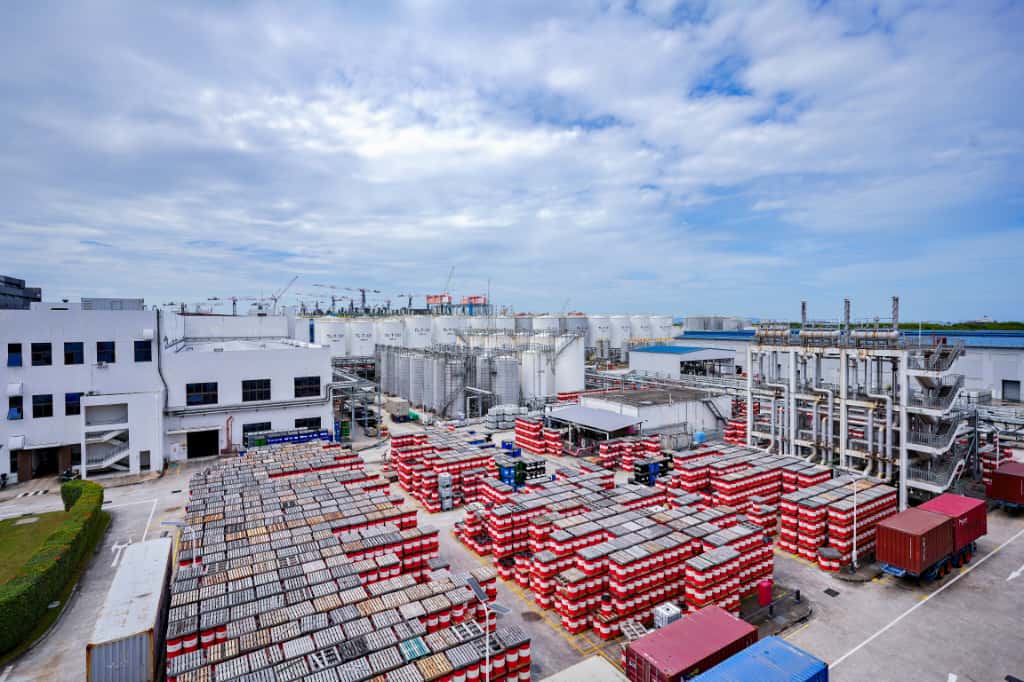
Filtration in lubricant production is a core process control, not a final corrective step before filling. In modern lubricant plants, product cleanliness, visual clarity, equipment reliability, and batch-to-batch consistency are achieved through staged filtration integrated across base oil handling, additive dosing, blending recirculation, storage transfers, and final packaging.
When contamination is allowed to enter early—rust, pipe scale, tank debris, degraded seals, or handling residues—it migrates downstream and becomes progressively harder to remove. The result is haze, sediment, blocked filler nozzles, unstable differential pressure, unplanned downtime, and customer complaints. Effective filtration in lubricant production is therefore about engineering control across the entire process, not firefighting at the end.
Why Filtration in Lubricant Production Has Become More Demanding
Lubricant producers today operate at higher throughput, with tighter appearance expectations and less tolerance for variability. Customers increasingly expect finished lubricants to remain visually clear and stable throughout storage and use. At the same time, plants handle multiple formulations, additive packages, and packaging formats within shared infrastructure.
These realities mean that even small lapses in cleanliness—introduced during transfer, blending, or packaging—can translate into visible defects or operational disruption. Filtration in lubricant production has therefore shifted from a maintenance-driven activity to a quality- and reliability-driven engineering function.
Stage 1: Base Oil Receiving and Tank Farm Transfers
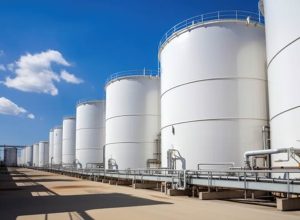
Base oils (Group II and Group III) are typically received via bulk tankers, ISO containers, drums, or IBCs and transferred into storage tanks. This stage carries the highest risk of gross contamination, including rust and scale from pipework, transport debris, gasket fragments, and tank-bottom disturbance during pumping.
The objective of filtration at this point is not fine polishing, but robust solids interception to prevent contamination from entering storage and blending systems.
Typical filtration role: bulk solids removal and pump protection
FiltraCore Asia fit: LFX-BCL™ Coolant & Lubricant Filter Bags, LFX-PP™ Polypropylene Filter Bags, and LFX-PE™ Polyester Filter Bags applied on receiving and transfer lines where high flow rates and variable solids loading are common.
Stage 2: Transfer to Blending Tanks
Once base oil is routed from storage to blending, a second filtration point is often applied to stabilise cleanliness before product enters the blend vessel. Any solids that reach the blend tank are likely to circulate repeatedly during mixing and recirculation, increasing wear and generating secondary fines.
Filtration at this stage protects the blending system and reduces the burden on downstream filtration.
Typical filtration role: line protection and contamination stabilisation
FiltraCore Asia fit: LFX-PP™ and LFX-PE™ filter bags selected based on operating temperature and mechanical duty.
Stage 3: Additive Handling and Dosing Protection
Additive packages are often viscous and may contain undissolved material, crystallised residues, or packaging-related debris. Dosing skids, injection points, and static mixers are sensitive to even small contaminants, which can lead to nuisance blockage and unstable dosing.
Filtration here is focused on protecting metering accuracy and maintaining blend integrity rather than achieving final appearance.
Typical filtration role: fines control and dosing system protection
FiltraCore Asia fit: LFX-CCL™ Melt-Blown Polypropylene Coolant & Lubricant Depth Filter Cartridges and LFX-CMB™ Melt-Blown Polypropylene Depth Filter Cartridges, offering dirt-holding capacity and stable pressure behaviour.
Stage 4: Blending and Recirculation Loop Filtration
Modern lubricant plants commonly use recirculation loops to homogenise blends and manage temperature. Recirculation is also where contamination becomes self-reinforcing: once particles enter the loop, they repeatedly pass across pumps, valves, and heat exchangers, generating additional wear debris.
Filtration in the recirculation loop stabilises cleanliness, reduces fines that contribute to haze or sediment risk, and prevents premature loading of final polishing filters.
Typical filtration role: process stabilisation and fines reduction
FiltraCore Asia fit: LFX-CCL™, LFX-CMB™, or LFX-CSW™ String-Wound Depth Filter Cartridges, selected based on flow, temperature, and contaminant profile.
Stage 5: Heat Exchanger and Transfer Skid Protection
Heating and cooling are integral to many blending operations. Heat exchangers foul rapidly when solids are not controlled, leading to loss of thermal efficiency and increased cleaning frequency.
Filtration upstream of heat exchangers is an asset-protection measure, focused on extending equipment life and maintaining stable thermal performance.
Typical filtration role: equipment protection
FiltraCore Asia fit: depth filtration using LFX-CCL™, LFX-CMB™, or LFX-CSW™ cartridges where dirt-holding capacity is prioritised.
Stage 6: Finished Lubricant Storage and Transfer
After quality release, finished lubricants are transferred to intermediate or finished goods tanks before packaging. This stage is a frequent source of re-contamination due to tank bottom disturbance, aged pipework, or poorly managed changeouts.
Dedicated filtration at this point prevents late-stage contamination from undoing upstream process control.
Typical filtration role: cleanliness preservation
FiltraCore Asia fit: depth or pleated filtration depending on cleanliness targets and downstream sensitivity.
Stage 7: Final Polishing Before Packaging
The final filtration stage before filling is a critical control point in filtration in lubricant production. This is the last opportunity to prevent haze, sediment, and particulate-induced filler issues from becoming packaged defects.
In well-engineered plants, the final filter acts as a safeguard rather than a corrective measure.
Typical filtration role: final polishing and filler protection
FiltraCore Asia fit: LFX-CPLEAT-PP™ Pleated Polypropylene Filter Cartridges, providing controlled particulate retention, high surface area, and predictable differential pressure behaviour.
Stage 8: Packaging Line Protection Across All Formats
Whether filling small bottles, pails, drums, or IBCs, packaging lines share common failure modes: nozzle blockage, valve sticking, seal damage, and customer-visible contamination.
Final filtration placement must be close enough to the filler to prevent downstream pickup, while allowing safe, controlled changeout without introducing new contaminants.
FiltraCore Asia fit: LFX-CPLEAT-PP™ combined with properly sized HFX™ Filter Housings designed for sealing integrity, venting, drainage, and maintainable operation. 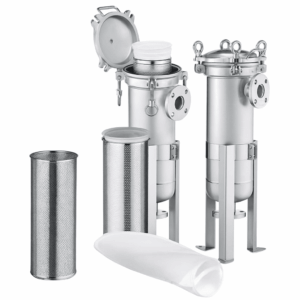
Stage 9: Utilities That Influence Filtration in Lubricant Production
Utilities often undermine otherwise well-controlled processes. Compressed air or inert gases used for packaging, blanketing, or pneumatic systems can introduce oil aerosols, moisture, and particulates that affect equipment reliability and cleanliness in sensitive zones.
Typical filtration role: utility reliability and contamination prevention
FiltraCore Asia fit: LFX-CLNG™ High-Pressure Gas Coalescing Filter Cartridges applied where clean compressed air or gas supply is required to support stable operations. 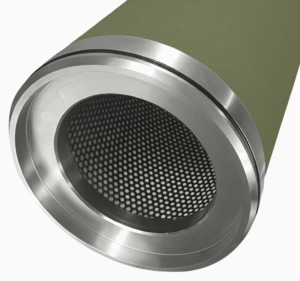
Where FiltraCore Asia Fits in Filtration in Lubricant Production
FiltraCore Asia supports lubricant producers with application-specific filtration solutions aligned to real production conditions. Upstream, LFX-BCL™, LFX-PP™, and LFX-PE™ filter bags provide robust protection during base oil receiving and transfer. Within blending and recirculation systems, LFX-CCL™, LFX-CMB™, and LFX-CSW™ depth cartridges stabilise cleanliness and protect equipment under continuous duty. Prior to packaging, LFX-CPLEAT-PP™ pleated cartridges deliver controlled final polishing to protect appearance and filling equipment.
These filtration elements are supported by HFX™ Filter Housings engineered for industrial lubricant service, ensuring proper sealing, safe changeout, and predictable operation. Where upstream interception is required, ACCSX-SSB™ stainless steel strainer baskets can be deployed ahead of primary filtration. For supporting utilities, LFX-CLNG™ addresses coalescing and particulate control in compressed air or gas systems where required.
The objective is not to overspecify filtration, but to design a staged filtration architecture that protects product quality, equipment, and uptime across the entire lubricant production process.
Conclusion: Filtration as Process Infrastructure in Lubricant Production
In modern plants, filtration in lubricant production determines more than cleanliness. It determines consistency, operational stability, and customer confidence. By integrating staged filtration from base oil blending through to final packaging, lubricant producers reduce risk, avoid late-stage surprises, and maintain control as production scales.
When engineered correctly, filtration becomes an invisible enabler of reliable, high-quality lubricant manufacturing.
For readers interested in a broader technical perspective on lubricants and their role in engineering and industrial applications, the ScienceDirect topic page on lubricants offers a comprehensive overview of lubricant types, functions, and performance considerations. Although positioned within earth and planetary sciences, the foundational concepts it covers — such as the behaviour of lubricating materials under varying conditions — provide useful context that complements the practical filtration strategies discussed in this article.