
Lubricant and Hydraulic Oil Filtration: 7 Critical Controls for Cleaner Systems and Longer Equipment Life
By FiltraCore Asia — Technical Insights Series
Lubricant and hydraulic oil filtration is a core reliability function in industrial systems. Unlike lubricant production, where quality is defined at the point of manufacture, lubricant and hydraulic oil performance in service is determined by how effectively contamination is controlled throughout operation.
In real plants—across petrochemical facilities, power generation, steel mills, marine systems, and heavy manufacturing—oil contamination is the primary driver of premature wear, valve sticking, servo instability, seal failure, and unplanned downtime. Filtration is therefore not an accessory to lubrication systems; it is a fundamental engineering control that determines equipment life, energy efficiency, and maintenance cost.
This article examines seven critical filtration control points that define effective lubricant and hydraulic oil contamination management in modern industrial systems.
1. Solid Particle Control and Wear Prevention
Hard particulate contamination—originating from wear debris, ingression, corrosion products, or maintenance activities—is the most direct cause of component damage in lubricated and hydraulic systems.
Particles smaller than the eye can see are capable of:
• Scoring pump and motor surfaces
• Accelerating bearing fatigue
• Jamming proportional and servo valves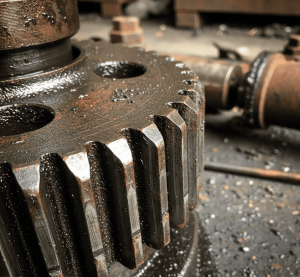
• Increasing internal leakage and energy loss
Effective lubricant and hydraulic oil filtration removes these particles before they circulate through high-load contact zones. Filtration performance at this stage directly correlates with reduced wear rates and extended component service life.
2. ISO 4406 Cleanliness Control as an Operational Target
The lubricant and hydraulic industry operates around ISO 4406 cleanliness codes (for example, 18/16/13 or cleaner), which define acceptable particle concentrations at multiple size thresholds.
Filtration is the only practical mechanism for achieving and maintaining target ISO cleanliness levels during operation. Without adequate filtration capacity and efficiency, even systems filled with clean oil will rapidly drift out of specification due to internal wear and external ingression.
Stable ISO cleanliness control reduces:
• Failure frequency
• Oil degradation rate
• Maintenance intervention
• Risk of catastrophic system faults
3. Filtration in Circulating and Recirculation Loops
In modern plants, lubricants and hydraulic oils are rarely static. Oils are continuously circulated through pumps, coolers, reservoirs, actuators, and control valves.
Filtration within circulating loops serves two critical functions:
• Continuous removal of wear-generated particles
• Stabilisation of contamination levels despite ongoing ingression
Depth filtration is commonly applied in these loops to provide high dirt-holding capacity and stable pressure behaviour under continuous duty, preventing sudden differential pressure spikes that disrupt flow or trigger bypass.
4. Viscosity, Temperature, and Shear Considerations
Lubricant and hydraulic oils operate across wide viscosity ranges depending on formulation, temperature, and operating condition. Filtration systems must be designed to accommodate these variations without creating excessive pressure drop or localised shear.
Incorrect media selection can cause high-velocity jetting through filter pores, which may mechanically shear long-chain polymer additives such as viscosity index improvers. This shear can permanently reduce oil viscosity and destabilise additive chemistry, degrading lubricant performance even when particle counts appear acceptable.
Proper filtration design balances:
• Media permeability
• Surface area
• Structural strength
to remove contaminants without damaging the oil itself.
5. Beta Efficiency and Fine Particle Retention
In hydraulic systems—particularly those using proportional or servo control—filtration effectiveness is measured not only by nominal micron ratings, but by Beta efficiency (βₓ).
High Beta ratios indicate consistent removal of fine particles responsible for valve malfunction and precision loss. Filtration systems with inadequate fine particle efficiency may meet flow requirements while still allowing damaging particles to circulate.
Maintaining stable Beta performance is essential for:
• Control accuracy
• System responsiveness
• Long-term reliability of precision components
6. Packaging, Transfer, and Top-Up Contamination Control
Packaging and handling represent an often-overlooked contamination pathway. Drums, pails, IBCs, and transfer equipment frequently introduce particles and moisture into otherwise controlled systems.
Once contamination enters a closed hydraulic or lubrication system, removal becomes costly and disruptive. Inline filtration during oil transfer, filling, and top-up operations prevents irreversible contamination events that lead to warranty disputes, field failures, and corrective flushing.
7. Utility and Gas-Related Contamination Pathways
Compressed air and process gases interact with lubricant systems through breather lines, pressurised reservoirs, and auxiliary equipment. Moisture, oil mist, and particulates introduced via utilities accelerate oxidation and sludge formation.
Gas and air filtration upstream of lubricant systems reduces secondary contamination sources and supports long-term oil stability.
Where FiltraCore Asia Fits
FiltraCore Asia supports lubricant and hydraulic oil filtration through application-specific filtration building blocks engineered for continuous industrial duty rather than generic consumable use.
For bulk particle control and circulating loops, LFX-PP™ and LFX-PE™ filter bags provide high dirt-holding capacity and robust performance in transfer and conditioning systems.
Where controlled fine filtration is required, LFX-CMB™ melt-blown depth filter cartridges are applied to stabilise ISO cleanliness levels while maintaining predictable differential pressure behaviour under viscous oil conditions.
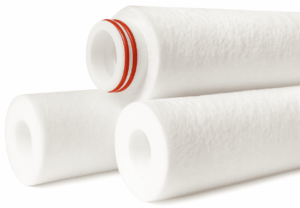
For final protection of sensitive components and guarding during oil transfer and top-up, LFX-CPLEAT-PP™ pleated cartridges offer increased surface area and lower flux per unit area, supporting fine particle control without excessive pressure drop.
In systems exposed to gas or air interaction, LFX-CLNG™ gas coalescing and depth filtration cartridges are deployed to remove moisture and aerosol contamination before these reach oil reservoirs or auxiliary circuits.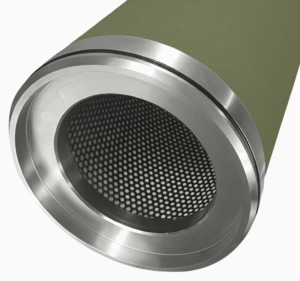
All FiltraCore liquid filtration elements can be supplied in material configurations suitable for demanding industrial environments, with compatibility across mineral oils, synthetic lubricants, and hydraulic fluids.
The objective is not over-filtration, but stable contamination control aligned with ISO cleanliness targets, system sensitivity, and real operating conditions.
Lubricant and Hydraulic Oil Filtration as a Reliability Strategy
Effective lubricant and hydraulic oil filtration directly translates into longer equipment life, lower energy consumption, reduced maintenance burden, and improved operational predictability.
Plants that treat filtration as a reliability discipline—rather than a maintenance afterthought—consistently achieve better uptime and lower total cost of ownership.
Conclusion
Lubricant and hydraulic oil filtration is one of the highest-leverage controls available to industrial operators. By managing particle contamination, protecting additive integrity, and preventing secondary ingression, correctly engineered filtration systems safeguard both machinery and process performance.
FiltraCore Asia supports industrial operators with filtration solutions designed to operate reliably under real-world conditions—helping systems stay clean, stable, and productive over the long term.
For readers seeking deeper academic insight into the principles and challenges of oil contamination and filtration performance, the linked Emerald Insight article explores foundational research on the filtration of hydraulic oils. This external resource provides a rigorous examination of the mechanisms by which particles, wear debris, and degradation by-products influence oil cleanliness and system reliability, offering valuable engineering context that complements the practical discussions in this article.